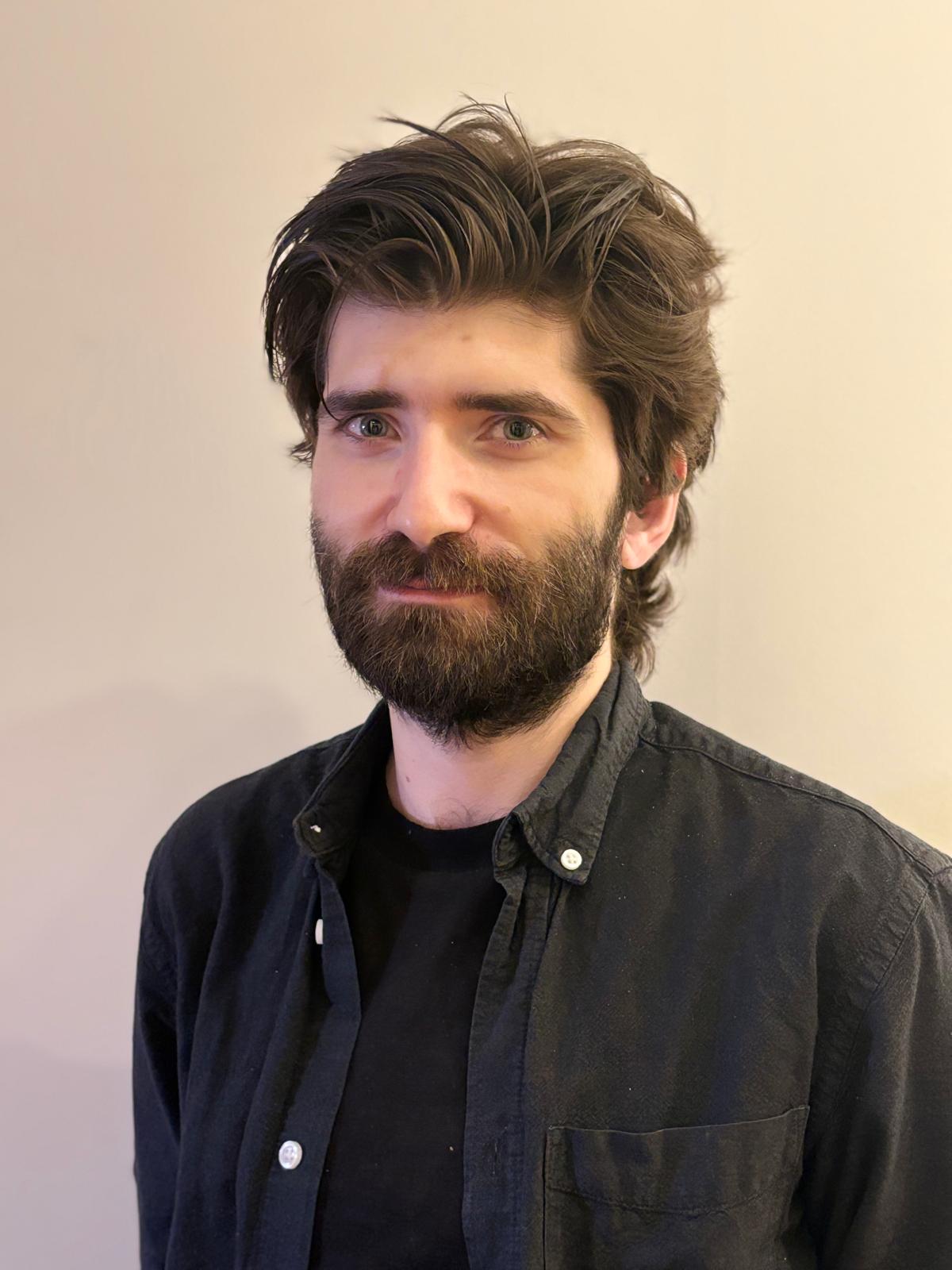
Employee portrait | R&D and portfolio quality
Half engineer, half artist: refining antibody performance across a global portfolio
Rafael Miranda works in R&D as an application specialist for immunohistochemistry and immunocytochemistry and as a Product Lifecycle Management gatekeeper. His work helps ensure that Atlas Antibodies' large antibody portfolio continues to meet high quality standards across applications and targets.
“Working in science means being half engineer and half artist.”
Fact box
- Name
- Rafael Miranda
- Role at Atlas Antibodies
- Lab Engineer for R&D; application specialist for IHC and ICC; Product Lifecycle Management gatekeeper
- Team / area
- R&D, application development, product lifecycle and portfolio quality
- Work focus
- Validation, product evaluation, data interpretation and continuous portfolio improvement
- Connection to mission
- Supporting solutions for studying more than 20,000 proteins while maintaining consistent quality standards
- Personal object
- Microtome — precise and focused when needed, relaxed otherwise
Q&A
Can you briefly introduce yourself and your role at Atlas Antibodies?
My name is Rafael Miranda. I am a lab engineer for R&D, working as an application specialist for immunohistochemistry and immunocytochemistry, and as a Product Lifecycle Management gatekeeper.
What part of your work do you find especially interesting or important?
Atlas Antibodies manages one of the largest polyclonal antibody portfolios in the world. That means we can offer solutions targeting most human proteins, but it also comes with the responsibility of continuously monitoring, evaluating and improving our portfolio so every product meets the high-quality standards our customers expect. Being part of the team that helps achieve this is incredibly rewarding.
What skills or mindset are important in your role?
Someone once said that working in science means being half engineer and half artist. I think that describes my role in R&D quite well. Precision and attention to detail are essential when validating products and evaluating data. At the same time, creativity is important for developing new ideas, solving problems and improving how we work.
Why Atlas Antibodies?
I originally joined Atlas Antibodies because of its connection to the Human Protein Atlas. It felt meaningful to be part of a company built on such an important scientific initiative. Four years later, the innovative spirit of the organization and the fantastic relationships I have built with colleagues continue to confirm that it was the right decision.
Why does your work matter to you personally?
Antibodies remain among the most important tools in modern life science research. From basic research to clinical studies, scientists rely on them to answer critical biological questions. It is satisfying to contribute to a company that offers solutions for studying more than 20,000 proteins while maintaining high-quality standards across the portfolio, from well-established markers to unexplored targets.
What do you appreciate about the people you work with?
One of the biggest strengths at Atlas Antibodies is the way the company culture promotes collaboration. Instead of departments working in islands, processes and projects encourage people from different teams to discuss and share knowledge. That strengthens projects by bringing together different skills and perspectives, and it creates opportunities for learning and personal growth.
Looking ahead, what are you excited about?
A lot of exciting things are happening, from new ways to visualize protein interactions with MolBoolean to new antibody products such as recombinant and conjugated antibodies. Internally, I am particularly excited about the progress we have made in modernizing how we manage and use data. Better databases empower people at Atlas to investigate their own processes more deeply and improve them.
Just for fun: what object matches your work style?
I would pick the microtome: precise and focused when needed, relaxed otherwise. It can get a bit grumpy from time to time.
“Antibodies remain among the most important tools in modern life science research.”
Explore Atlas Antibodies' IHC and ICC/IF antibodies, recombinant antibodies and conjugated antibodies.